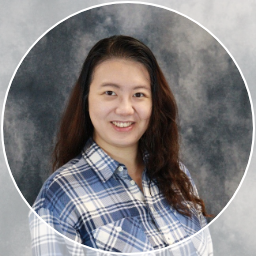
Professional Bio
Dr. Mengxuan Wu is an Assistant Professor in the Department of Communication Sciences and Disorders at The University of Texas Rio Grande Valley. She earned her Ph.D. in Speech Language and Hearing Science from the University of Texas at Austin (2024), with a research focus on Augmentative and Alternative Communication (AAC). She also holds an M.S. in Human Systems Engineering from Arizona State University and dual bachelor's degrees in Applied Psychology and Translation from Nankai University, China.
Research Interests
Current Projects
Dr. Wu's research is dedicated to advancing assistive technology for individuals with communication disorders, focusing on evaluating, utilizing, and customizing existing technologies to meet their needs better. Her work primarily involves AAC systems and the application of principles from applied psychology to enhance user interaction and outcomes. She is developing and testing innovative solutions that address specific challenges faced by people with communication impairments, aiming to improve both the functionality and accessibility of assistive devices.
Teaching Portfolio
Current Courses
- Fall 2024: COMD 2310 Introduction to Speech-Language-Hearing, COMD 3315 Anatomy and Physiology of Speech and Hearing, COMD 6310 Research in Communication Disorders
- Spring 2025: COMD 3310 Normal Language Development, COMD 4340 Speech Science, COMD 6397 Augmentative and Alternative Communication
- Summer 2025: COMD 6390 Autism and other Neurodevelopmental Disorders
Teaching Philosophy
My teaching philosophy centers on creating inclusive, hands-on learning environments that bridge theoretical knowledge with practical applications. Drawing from my interdisciplinary background in psychology, engineering, and communication sciences, I emphasize the importance of understanding both the human and technological aspects of communication disorders. I believe in fostering critical thinking through evidence-based practice and encouraging students to consider the diverse needs of individuals with communication challenges.
Research
Recent Publications
Dong, Y., Liu, G., Yin, Y., Wu, M., & Duan, F. (2024, December 10–14). Superpixel-based hierarchical graph convolution for enhanced interpretability in semantic segmentation. In Proceedings of the 2024 IEEE International Conference on Robotics and Biomimetics (pp. 1615–1620). IEEE. https://doi.org/10.1109/ROBIO.2024.272
Zhao, J., Wu, M., Sun, F., Yang, H., & Wu, J. (2024). Perceived stress and marital quality of chinese older couples: communication as an effective protective factor. Current Psychology, 43(1), 669-679.
LaValley, M., Chavers-Edgar, T., Wu, M., Schlosser, R., & Koul, R. (2024). Augmentative and Alternative Communication Interventions in Critical and Acute Care With Mechanically Ventilated and Tracheostomy Patients: A Scoping Review. American Journal of Speech-Language Pathology, 33(5), 2667-2686.
Wu, M. (2024). Isometric Representation of Graphic Symbols for Spatial Prepositions: Effects on Name Agreement and Identification. [Doctoral Dissertation, the University of Texas at Austin].
Schlosser, R. W., Choe, N., Koul, R., Shane, H. C., Yu, C., & Wu, M. (2022). Roles of Animation in Augmentative and Alternative Communication: a Scoping Review. Current Developmental Disorders Reports, 9(4), 187-203.
Recent Conference Presentations (2024)
- Visionary Session Award: "Predicting Spatial Preposition Naming Accuracy in Mandarin-Speaking Children from Acoustic Features" - ASHA Convention, Seattle, WA
- "Acquisition of Spatial Prepositions in Mandarin-speaking Preschoolers: a Scoping Review" - ASHA Convention, Seattle, WA
- "Isometric representation of graphic symbols for Mandarin Spatial Prepositions: Effects on Name agreement and Identification" - ASHA Convention, Seattle, WA
Research Gallery
Ongoing Research
Current research projects include developing spatial preposition symbol intervention tools, investigating keyboard display effects in brain-computer interface spellers, and conducting surveys of AAC knowledge among practitioners in special education. The lab also focuses on machine learning applications for predicting speech production accuracy and improving assistive technology accessibility.
Student Resources
Academic Advising
For prospective graduate students: I welcome inquiries from students interested in AAC research, assistive technology, and interdisciplinary approaches to communication disorders. Please email me with your research interests and background.
For current advisees: Regular meetings are scheduled to discuss research progress, coursework, and professional development. I encourage students to take an active role in research projects and seek opportunities for conference presentations.
Frequently Asked Questions
Q: How do I join your research group?
A: Send me an email describing your interests in AAC, assistive technology, or related areas. Include your CV and a brief statement of your research goals.
Q: What are the prerequisites for your courses?
A: Prerequisites vary by course. Check the course catalog or contact me directly for specific requirements.
Service
Community Engagement
- Guest speaker for AAC topics at UTRGV
- Consultation for local schools implementing assistive technology programs
- Volunteer work with organizations serving individuals with communication disorders
Professional Service
- Editorial Boards: Assistant Editor, International Psychogeriatric Association (IPA) Bulletin (2024-present)
- Review Activities: Peer reviewer for Journal of Gerontological Social Work, and Psychology for Clinical Settings
- Conference Organization: ASHA member, ASHA SIG 12: AAC member, ISAAC member
University Service
- Honors-by-Contract Projects Mentor with Honors College Students (2024-2025)
- Graduate admissions committee - CSD Program
Collaborations
Active collaborations with researchers at UT Austin, Northeastern University and University of Nebraska-Lincoln.